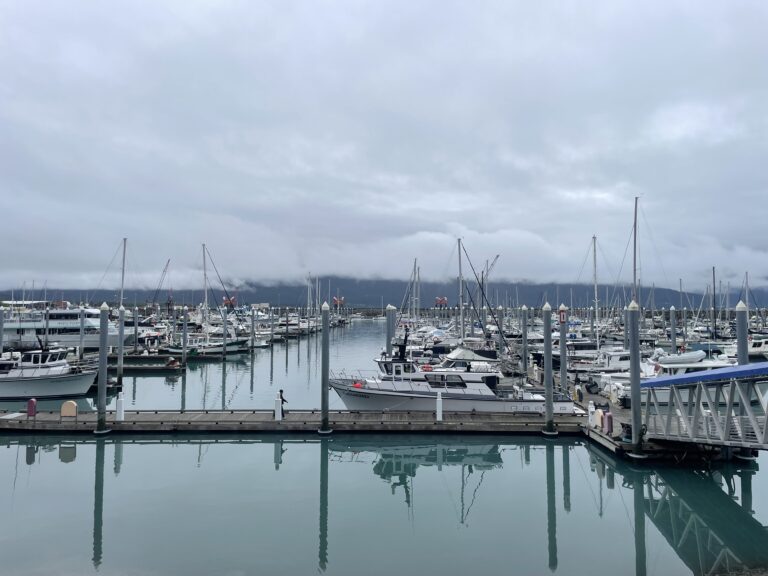
Day 2: Soldotna, Alaska. I believe I have finally caught up on sleep from the nearly 24 hours of being awake getting into Anchorage, Alaska, on Saturday. Yesterday was spent on a large tourist cruise tour going from Seward, Alaska, down through Kenai Fjords National Park’s original wildlife areas. On the cruise were Daniel Boone, now 76; his grandson, Ryan King (15); Cory Gale; myself; and Emory Gaskill, to date the best banjo player I’ve come across thus far. Not in company were our fearless leader, Tom Wofford, and his brother from Huntsville, Alabama, Paul. I think between the lot of us, our guardian angels must be working overtime.
Our tour through the glacier country, funny enough, did not include any glaciers, but by circumstances unknown we ended up having a “great day,” says our captain (Captain Wade), along with his crew. We witnessed more animals than I know what to do with, including a pod of humpback whales that co-feed, meaning they dive in circles underwater for a time, apparently bringing scores of fish into the cyclone. After a brief but very noticeable blow of the trumpet from the leader whale, all of them come up in a hurry, bringing with them tons of fish to feed on and also giving quite a meal to the dozens of birds that follow them in hopes of free meals—which they receive quite a bit of.
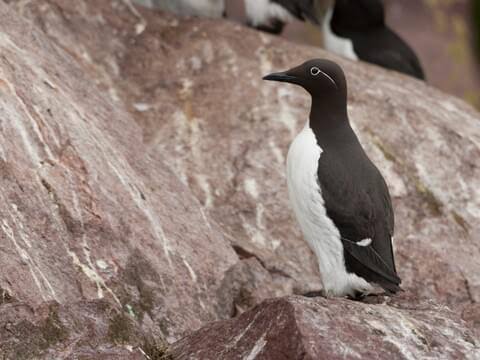
Besides the whales, we caught sight of Common Murres (pictured below), which, according to our captain, were the super-birds of all super birds. While looking like a lesser penguin cousin, they can accomplish dives of over 600 feet below ocean level in search of food. It occurred to me that I couldn’t manage 6 feet without my ears popping.
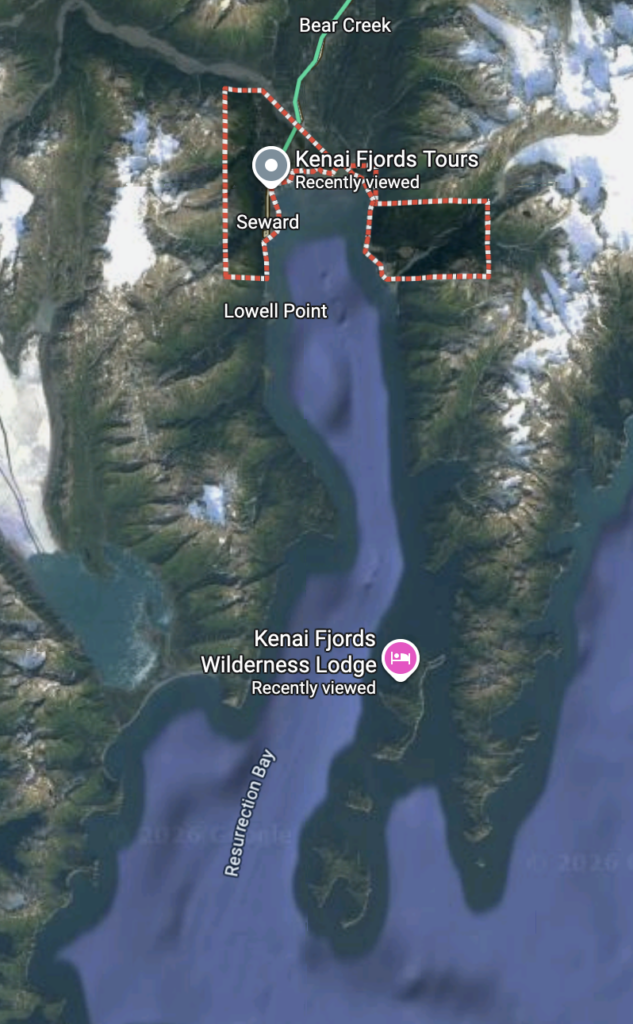
The Fjord tour cruises have mastered the art of “getting the tip” in that, if you didn’t leave the captain or crew a tip upon your exit, you would genuinely feel as though you missed the opportunity to reward a job well done. Our 4.5-hour journey went down through Lowell Point and into Resurrection Bay, with lasting sights to fill the mind and soul, but what was overall most impressive was the casual talent of the captain himself, not only in his mannerisms and kindness, but more importantly in his knowledge of the land, history, and people around him. To top it all off, the cabin air was filled with the smell of fresh-baked chocolate-chip cookies, whereupon one of the staff walked around in a chef hat divvying out this Alaskan manna right before the tour’s end, teaching me a valuable lesson: if you want to make good memories, you’d better make cookies.
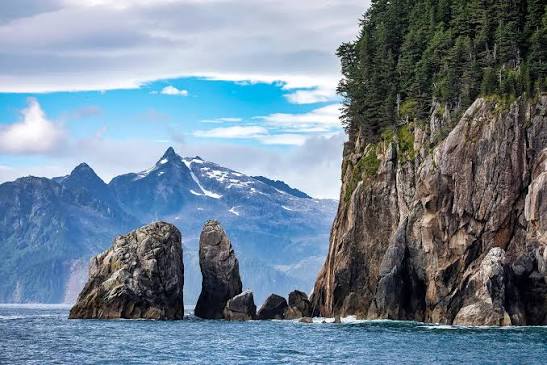
Beyond the whales, there were a number of cliffs, mountains, and sights that words cannot describe, and no camera we’ve brought to the task has been able to capture their sheer beauty and magnificence. The sheer size and glory of these mountains have a way of reminding you of Romans 1. In it, Paul says that creation itself is a witness to humanity, not only of God’s goodness and the fact that good exists in the world, but also of evil. That evil exists is one thing, but that humans can be evil, and that indeed all of us carry an evil in us that suppresses the Truth, is another.
The wrath of God is being revealed from heaven against all the godlessness and wickedness of people, who suppress the truth by their wickedness, 19 since what may be known about God is plain to them, because God has made it plain to them. 20 For since the creation of the world God’s invisible qualities—his eternal power and divine nature—have been clearly seen, being understood from what has been made, so that people are without excuse. – Romans 1:18-20
At first glance, one might walk away with a shallow perception that God is good, people bad, and fancy words that God’s god-likeness is somehow seen.
But when you glance at something so big and powerful as those mountains—when creation surrounds you in such a way that the eye and mind’s response is overwhelmed—you begin to take notice that this passage is talking about these moments. Have you ever seen something so beautiful and divine that, upon seeing it, you were made aware not only of how magnificent the beauty in front of you is, but simultaneously aware of the parts of your life that are inferior to that beauty?
That inferiority can take many expressions. Sometimes it’s simply acknowledging that what you see is near Heaven-like, and much of life, including you, is not nearly so Heaven-like in comparison. At least not to the extreme of how Heaven-like it is.
Sometimes the things we behold can stir covetousness within us. Rather than appreciating beauty as a gift, we begin to grasp for it, determined to possess it for ourselves. “I’ve got to have this now” becomes our mantra in those moments—a sentiment that is, at its core, the language of lust. We lust after places, people, possessions, identities, experiences, and countless other things.
Yet this very tendency reveals something profound about the human condition. As Paul argues in Romans, the beauty and majesty of creation testify that goodness exists. Mountains, oceans, forests, and the wonders of the natural world point beyond themselves to a Creator and to an objective standard of goodness. In this way, creation not only displays God’s glory but also exposes our own hearts, reminding us of our inclination toward sin and leaving us without excuse.
If we acknowledge that goodness exists, and that some things are truly better, nobler, and more beautiful than others, we are inevitably led toward the reality of an Absolute Good. And if an Absolute Good exists, then evil cannot merely be an illusion or a matter of preference. Rather, evil is the corruption, rejection, or absence of that good. In recognizing both the goodness revealed in creation and our tendency to distort and pursue it wrongly, we are confronted with the reality of both God’s holiness and our need for Him.
Throughout all of this tendency to find great truths among mere rocks and water, the day was a wonderful beginning to the trip. A few of the things I’ve noticed about Alaska upon first impression are the ruggedness not only of its natural habitat, but of its people. The people are generally independent-minded, self-sufficient, and practical. The towns and byways are marked by small homesteads where it’s clear that utilitarianism, or the practicality of sufficiency, is much more important than the aesthetics of the home itself—a stark contrast to the suburban neighborhoods I am used to in Nashville. Another important aspect I’ve noticed is that gas stations and restaurants are few and far between. Because of the lack of oil refineries in Alaska, gas is expensive (and important).
Restaurants are also a needle in a haystack in comparison to what I am used to in a major metropolis, and prices are not cheap, even compared to Nashville’s high-end chef-life prices. Last night we stopped at Two Brothers Roadhouse in Cooper Landing. We all shared pizzas on Daniel Boone’s dime (thank you, Daniel), which resulted in Emory reaching legendary status by downing an entire Hawaiian pizza alone, to our disbelief, while also introducing us to a new set of friends who sat down at our community table in hopes of marking it for his family. The man was a retired doctor who looked and spoke much like Hawkeye from M.A.S.H. and told us stories about his time working with Native Alaskans in remote villages throughout the countryside.
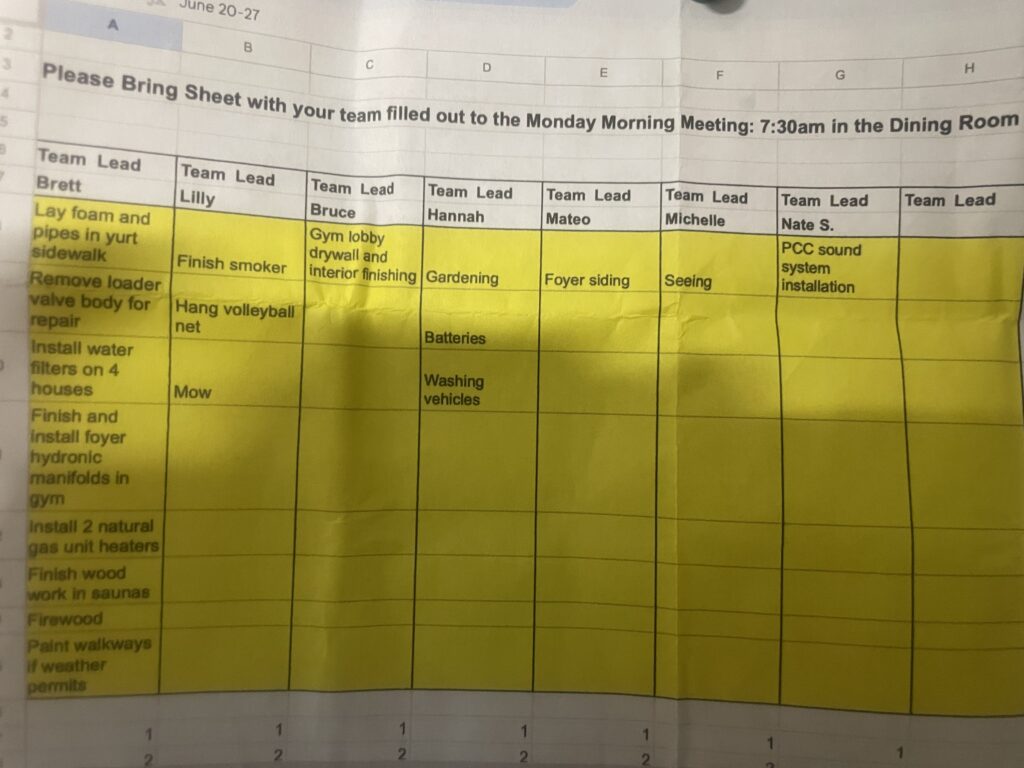
Overall, my experience of Alaska so far is once-in-a-lifetime. I can’t wait to learn more about the people and mission we’re here for—Alaska Christian College—and what the Lord has been doing here over the last 25 years. Today starts the work we’re here for:
More updates to come.