Source + Pressure
The available connection, pressure, flow, distance, and elevation establish the practical limits of the irrigation plan.
We plan watering as part of the garden itself—coordinating the source, zones, beds, planting areas, paths, structures, and the household’s way of tending.
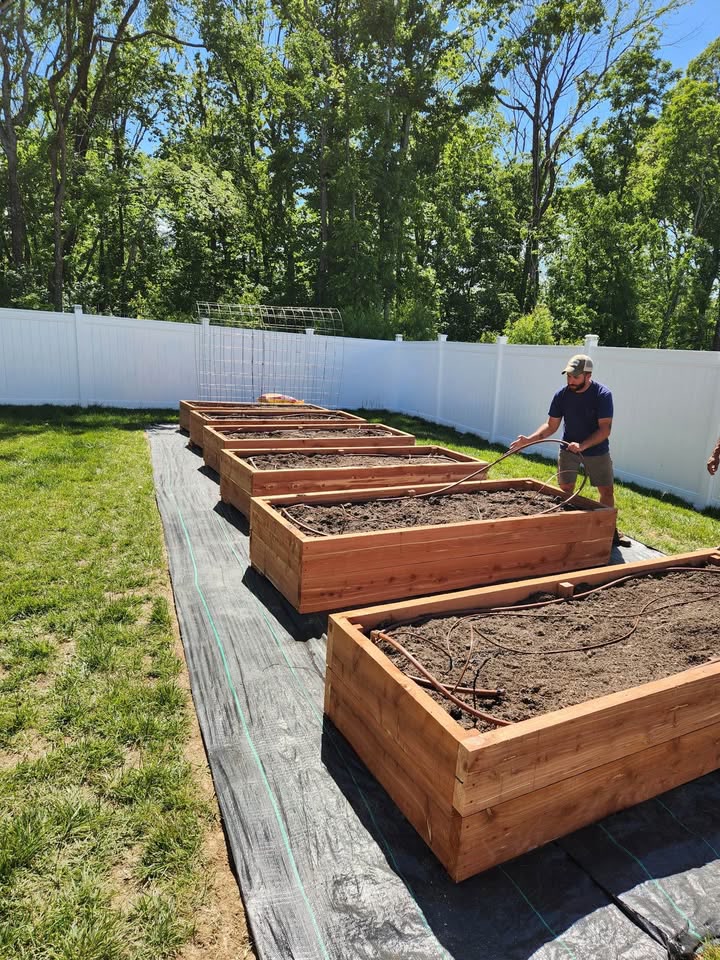
Garden irrigation is the planned delivery of water to raised beds, kitchen gardens, edible landscapes, and other cultivated areas. A useful system begins with the plants and layout, then accounts for the water source, pressure, distance, elevation, zones, exposure, and how the garden changes through the season.
Avodah considers irrigation early so supply lines, valves, emitters, beds, paths, trellises, and protection work together. The aim is consistent watering and practical stewardship without allowing the system to dominate the garden.
The available connection, pressure, flow, distance, and elevation establish the practical limits of the irrigation plan.
Beds and planting areas with different exposure, soil, or water needs may need to be grouped and managed separately.
The garden layout and crops guide how water should be delivered and where components can remain accessible for observation and care.
Soil texture, drainage, grade, runoff, and bed construction affect how quickly water can be applied and retained.
Lines and controls should be routed with circulation, tools, gates, mowing, wildlife, and future garden work in mind.
A system should be understandable to the household and adaptable to seasonal planting, weather, maintenance, and winter conditions.
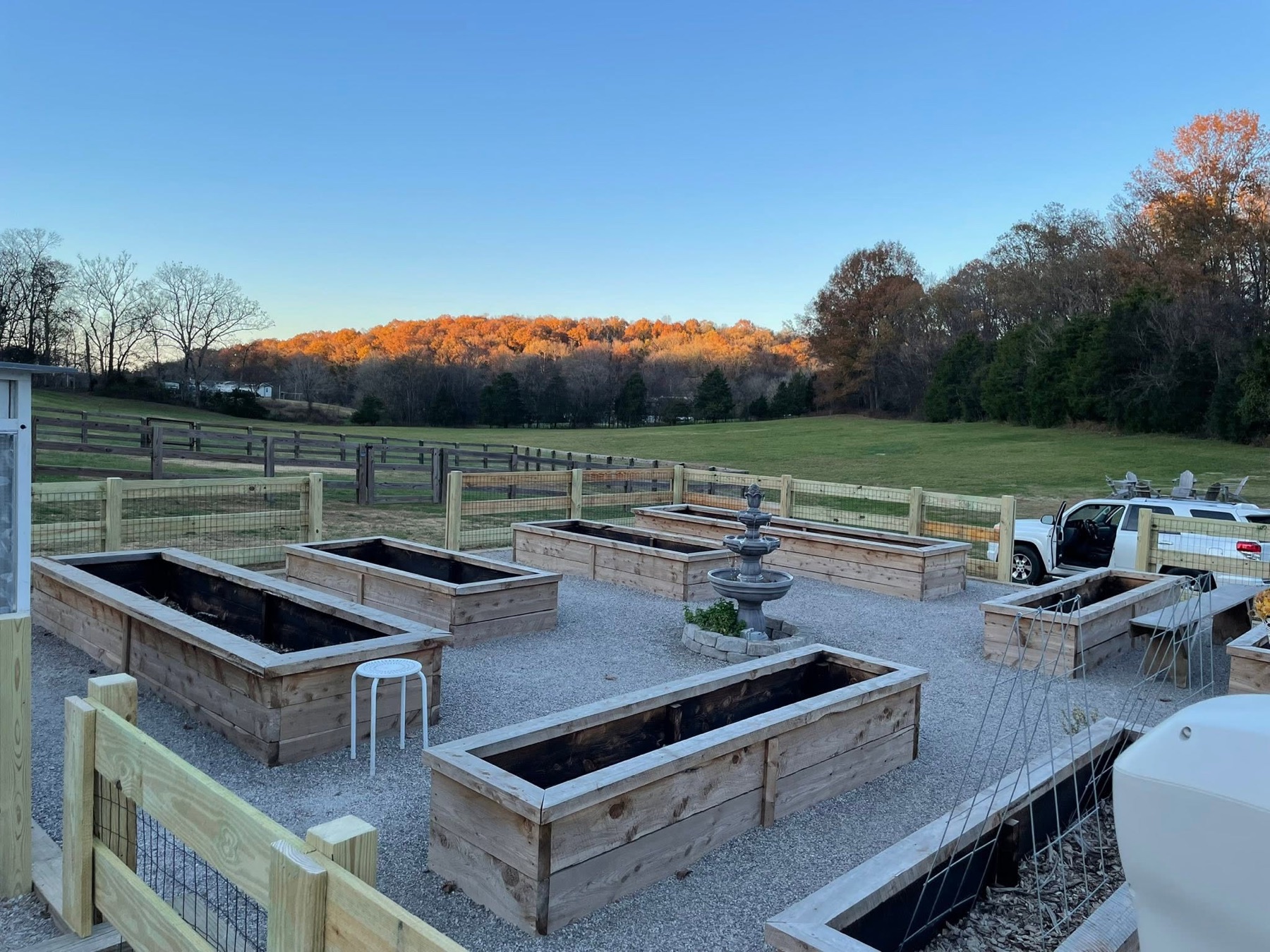
Avodah’s completed garden work shows beds, paths, trellises, gates, protection, and water considered together. Irrigation may be included with a new build or evaluated as an improvement to an existing growing space.
See selected garden workWe clarify the growing areas, present watering routine, known problems, and the household’s goals for the garden.
We study the water source, pressure and flow, distance, grade, beds, soil, access, exposure, and existing components.
Zones, routes, delivery approach, controls, protection, and any coordination with new garden work are defined.
Avodah installs the agreed components with attention to orderly routing, access, and the finished garden.
We explain the practical operating approach and can remain available for seasonal garden coaching or related care.
Avodah serves Nashville, Brentwood, Franklin, Nolensville, Arrington, Leipers Fork, Williamson County, Davidson County, and nearby Middle Tennessee communities.
Irrigation needs vary with the garden, water source, soil, exposure, plant maturity, and household routine. A site-specific plan is more useful than assuming one schedule or layout will fit every property.
Raised beds can be watered by hand, but a planned irrigation system can make watering more consistent and practical. The right approach depends on the bed design, soil, crops, exposure, and household routine.
Often, yes. Avodah can review the existing layout, source, routes, beds, and access to determine whether a focused improvement is practical.
Not necessarily. Exposure, soil, plant type, root depth, bed construction, and season can create different watering needs. Appropriate zones help account for those differences.
Yes. Planning water with the initial garden layout allows beds, paths, trellises, gates, protection, and supply routes to work together more cleanly.
Some components must remain accessible, but routing and placement can be considered with the finished garden so the system remains orderly and serviceable.
No. Weather, soil moisture, plant growth, leaks, clogged components, and seasonal changes still require observation. Irrigation supports stewardship; it does not replace it.
Avodah serves Nashville and communities across Middle Tennessee, including Brentwood, Franklin, Nolensville, Arrington, Leipers Fork, Williamson County, and Davidson County.
Tell us about the growing space, water source, present routine, and any problems you want the irrigation plan to solve.
Tell us about your garden